The Luxury of Stillness: How Al Marjan Island's Resorts Have Mastered the Art of Restorative Rest
There is a particular kind of exhaustion that no spa treatment can cure. It is the fatigue that accumulates not from physical exertion but from the relentless cognitive hum of modern American professional life—the notifications, the deliverables, the optimized calendars. For a growing number of high-achieving travelers, the conventional resort experience, with its curated excursion lists and activity coordinators, has begun to feel like an extension of the very culture they are trying to escape.
Al Marjan Island, the jewel of Ras Al Khaimah's coastline, has taken notice. Across its collection of world-class resorts, a quiet philosophical shift is underway—one that treats deliberate inactivity not as wasted time, but as the most sophisticated offering a destination can extend.
When Architecture Becomes an Invitation to Rest
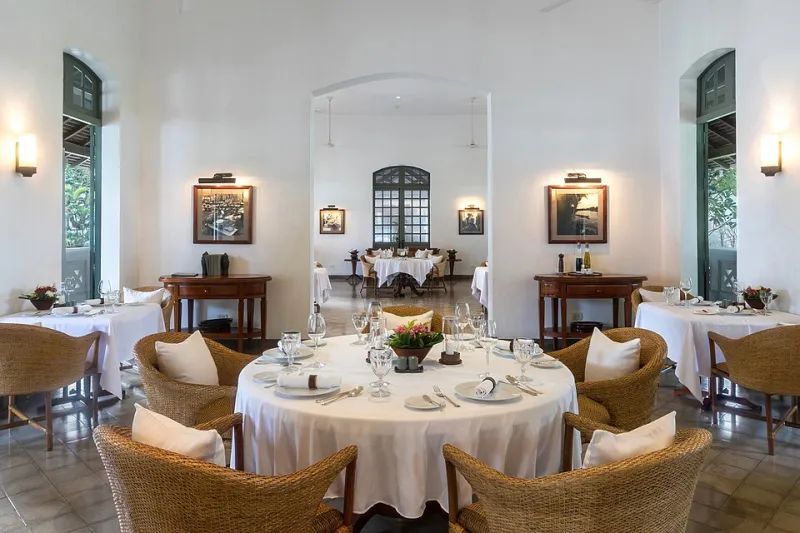
The built environment at Al Marjan Island's premier resorts is not accidental. Every sightline, material choice, and spatial proportion has been considered with a singular purpose: to lower the psychological defenses of a guest who may not even realize they are still carrying the weight of their working life.
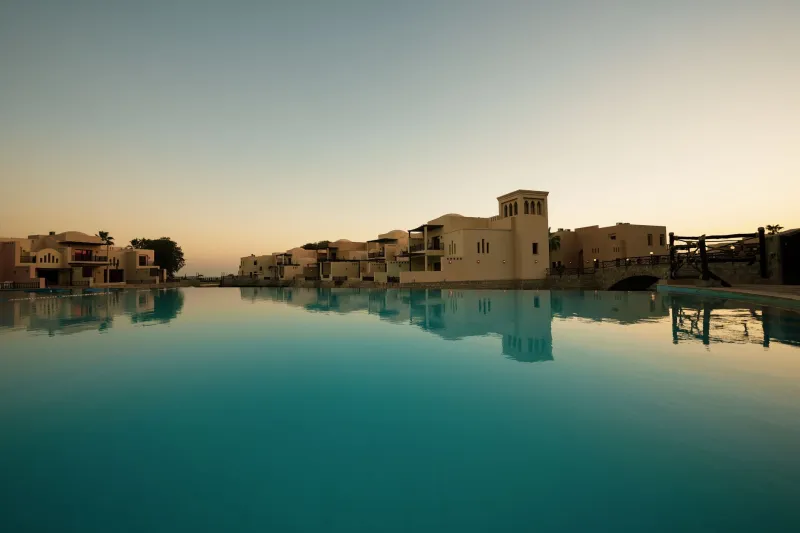
Resort designers working across the island have drawn from a confluence of influences—Emirati architectural traditions that prize shaded courtyards and the soft diffusion of natural light, and contemporary hospitality neuroscience, which has mapped the relationship between spatial design and the nervous system's capacity to downshift. The result is a built language that whispers rather than announces. Ceilings rise to heights that dissolve anxiety. Corridors open onto unexpected vistas of the Arabian Gulf, each one a small, unrequested gift. Water features are positioned not for visual spectacle but for their acoustic properties—the sound of moving water, researchers confirm, reliably shifts the brain toward a more receptive, parasympathetic state.
For the American guest accustomed to hotels that perform grandeur, this quieter form of luxury can take a day or two to register. And that, say those who study the psychology of leisure, is precisely the point.
The Psychology of Permission
Behavioral scientists who study leisure and recovery have long argued that one of the greatest barriers to genuine rest is not the absence of time, but the absence of permission. High-achievers, in particular, are conditioned to derive identity from productivity. A vacation that does not yield a tangible output—a summit reached, a cultural landmark photographed, an activity mastered—can trigger a subtle but persistent unease.
Al Marjan Island's hospitality philosophy addresses this directly. Rather than filling the guest's day with optional programming, the island's leading resorts have invested in what might be called the architecture of permission: environmental and service cues that signal, repeatedly and gently, that rest is not only acceptable here—it is the intended experience.
This manifests in details that are easy to overlook individually but cumulative in their effect. Breakfast service that extends well into the late morning, removing the implicit pressure to be somewhere by a certain hour. Loungers positioned to face the Gulf rather than the pool bar, orienting the guest's gaze toward the infinite rather than the social. Menus that offer restorative, lightly composed dishes alongside more elaborate fare—because the body, like the mind, benefits from the option of simplicity.
The Concierge as Quiet Architect of Your Day
Perhaps nowhere is Al Marjan Island's philosophy of intentional idleness more evident than in the evolution of its concierge culture. The traditional concierge role—facilitating reservations, arranging transfers, recommending attractions—has been quietly reimagined at the island's finest properties.
The new concierge is less a logistics coordinator and more a skilled reader of human states. Through careful observation and pre-arrival correspondence, these professionals develop a nuanced understanding of what each guest actually needs, which is frequently not what the guest has requested. A couple who has booked an aggressive itinerary of excursions may find, on the morning of their third day, that their concierge has gently noted a cancellation window—not to pressure a change of plans, but to ensure the option of stillness remains available if the impulse arises.
This anticipatory service model, refined over years of hosting discerning international guests, operates on a principle that luxury hospitality professionals describe as the removal of friction before it is felt. Needs are addressed before they surface as wants. Wants are addressed before they surface as requests. The guest, relieved of the minor cognitive burden of managing their own comfort, finds that the mental space this creates is itself a form of rest.
What the Gulf Teaches About Time
There is something in the physical character of Al Marjan Island that abets the project of slowing down. The Arabian Gulf, in this latitude, possesses a quality of light that is unlike anything most American visitors have encountered. In the early morning and late afternoon, it turns the water to hammered copper and rose gold—colors that seem to belong to no particular hour, that resist the tyranny of the clock.
The island's geography reinforces this temporal looseness. Extending into the Gulf on a series of interconnected landmasses, Al Marjan Island offers a sense of remove that is both literal and psychological. The mainland is visible but distant. The horizon is wide. The scale of the water—and of the sky above it—has a way of repositioning the individual within a larger frame, one in which the urgency of the typical American workday becomes, at least temporarily, difficult to locate.
Guests who have spent time here describe a phenomenon that is well documented in the leisure research literature: the expansion of perceived time. When the brain is not engaged in goal-directed activity, when it is permitted to wander and observe without agenda, time itself seems to lengthen. An afternoon on a shaded terrace overlooking the Gulf can feel, in the best possible way, like something far longer.
Planning Your Own Stillness
For the American traveler considering Al Marjan Island as a destination for intentional rest, a few practical considerations are worth noting. The island is most conducive to this kind of experience when approached with a deliberately open itinerary. Resist the impulse to pre-book every hour. Allow the resort's concierge team to guide the shape of your days once you have arrived and settled.
The shoulder seasons—late October through November and March through April—offer temperatures and light conditions that are particularly suited to extended outdoor stillness. The heat of the Gulf summer, while managed beautifully by the island's resort infrastructure, can make certain forms of outdoor repose less comfortable for those unaccustomed to it.
Finally, consider extending your stay beyond what initially feels necessary. Al Marjan Island's particular form of luxury—the luxury of nothing—requires time to take effect. The first day is often spent shedding the momentum of the life you have temporarily left behind. It is on the second and third days that the island begins to work its quieter magic.
In a world that has commodified busyness, Al Marjan Island offers something genuinely rare: the confidence to offer you nothing, and the craft to make that nothing feel like everything.