From the First Moment: How Al Marjan Island Has Transformed Guest Arrival Into a Signature Luxury Ritual
There is a moment, familiar to any seasoned traveler, when the machinery of a journey—the layovers, the customs queues, the ground transfers—finally gives way to something that feels like arrival rather than mere displacement. At Al Marjan Island, that moment has been studied, refined, and elevated into one of the most deliberately constructed experiences in contemporary luxury hospitality. The destination does not simply receive guests. It receives them with intention.
For American visitors making the long-haul journey from cities such as New York, Los Angeles, or Miami, the physical distance to Ras Al Khaimah is considerable. What Al Marjan Island's hospitality infrastructure understands—and what distinguishes it from comparable destinations in the Maldives, the French Riviera, or the Caribbean—is that the quality of arrival is not incidental to the luxury experience. It is, in many respects, the experience itself.
The Sky-Side Introduction: Private Aviation and Pre-Arrival Coordination
For a growing segment of high-net-worth American travelers, the journey to Al Marjan Island begins not at a commercial terminal but at a private aviation facility. Ras Al Khaimah International Airport, situated a short distance from the island, accommodates private jet arrivals with a level of discretion and efficiency that sets an immediate tone. Dedicated FBO (Fixed Base Operator) services, expedited customs clearance, and pre-arranged ground transportation mean that the transition from aircraft to resort is measured in minutes rather than the grinding hours that characterize commercial travel.
Resort concierge teams coordinate with guests well before departure from the United States, gathering preferences, dietary requirements, and personal details that will inform every subsequent touchpoint. This pre-arrival dialogue is not merely administrative—it is the opening movement of a hospitality composition that will unfold across the entirety of the stay.
For those traveling via commercial routes through Dubai International Airport or Abu Dhabi, the island's partner properties arrange seamless transfers along the Emirates Road corridor, with vehicles that speak the same language as the destination: climate-controlled, immaculately appointed, and staffed by professionals who understand that the journey is already part of the experience.
The Architecture of Welcome: Wayfinding as Hospitality
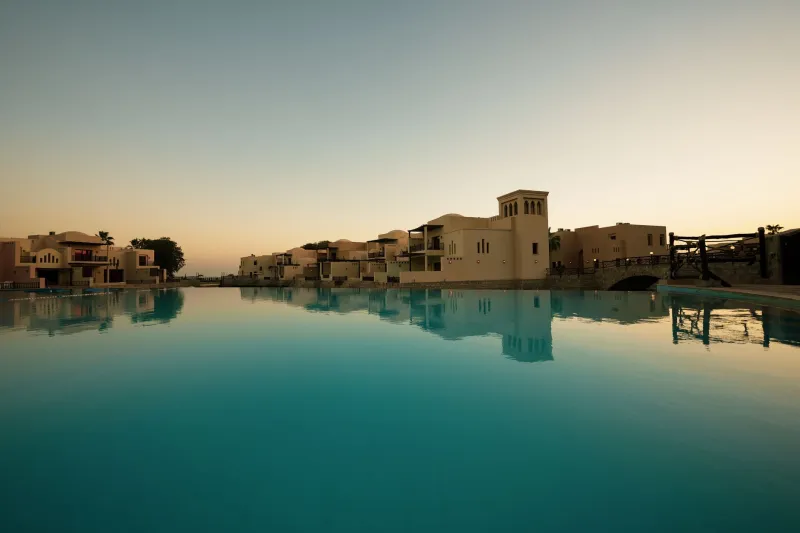
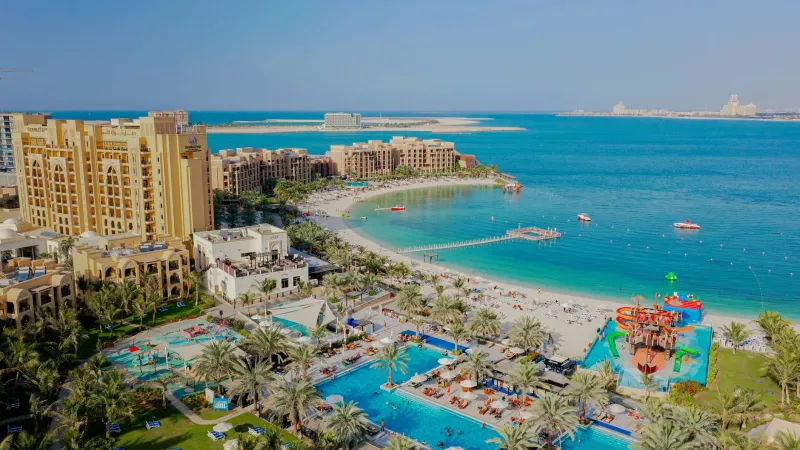
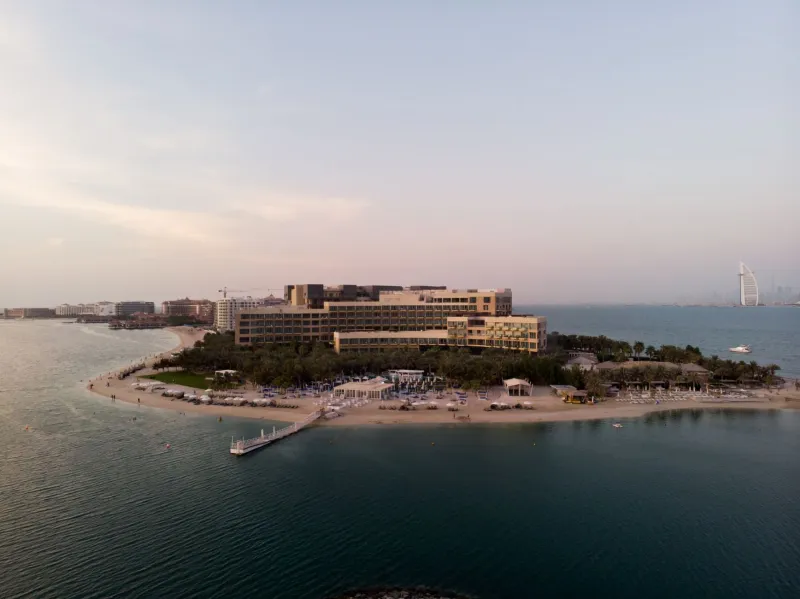
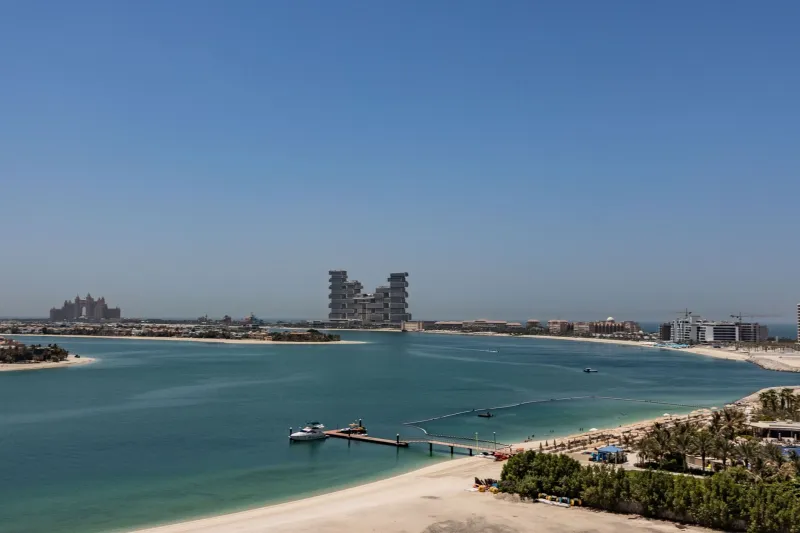
Upon crossing onto Al Marjan Island's distinctive causeways—the engineered landmasses that extend gracefully into the Arabian Gulf—the visual grammar of the destination begins its quiet work. The island's urban design philosophy prioritizes clarity and calm over spectacle. Wayfinding is intuitive, the landscaping deliberate, and the transition from the broader Ras Al Khaimah highway network to the island's interior roads is marked by a perceptible shift in atmosphere.
Architectural wayfinding at Al Marjan Island operates on the principle that disorientation is the enemy of luxury. Resort entrances are announced through scale, material, and light rather than signage alone. Approaching a premier property along the island's waterfront, guests encounter the kind of architectural confidence that communicates, without a word, that they have arrived somewhere of consequence.
The interplay of natural light, water features, and indigenous plantings along approach roads is not accidental. These elements have been composed to begin the psychological transition from the ordinary world—with its demands, its noise, and its unrelenting pace—to something considerably more measured.
The Check-In Ceremony: Redefining a Familiar Ritual
In mainstream hospitality, check-in is a transaction. At Al Marjan Island's flagship properties, it is something closer to a ceremony—and the distinction matters enormously to the American traveler who has come to expect, and often dread, the bureaucratic tedium of hotel registration.
Bespoke check-in protocols vary by property, but common threads run through the island's finest offerings. Guests are typically greeted by name at the vehicle, escorted rather than directed, and offered refreshment—chilled Arabic coffee, date-infused water, or something more tailored to a preference noted during the pre-arrival exchange—before a single document is reviewed. The transactional elements of registration are handled discreetly, often completed in advance or managed at a private seating area rather than a public counter.
Room keys—or, at the most exclusive properties, digital credentials loaded onto a guest's personal device—are presented with the kind of quiet ceremony that acknowledges their symbolic weight. This is not the handing over of a plastic card. It is the transfer of access to a space that has been prepared specifically for the person receiving it.
Some properties on the island have taken this further, assigning a dedicated butler or personal liaison from the moment of arrival. This individual serves as the guest's primary point of contact throughout the stay, removing the friction of repeated introductions and ensuring that every preference, once expressed, is remembered without being asked again.
The First 24 Hours: Engineering a Complete Transition
What separates truly exceptional luxury destinations from merely excellent ones is the recognition that the first 24 hours of a stay are disproportionately influential. Impressions formed in this window shape the emotional tenor of everything that follows. Al Marjan Island's hospitality culture is acutely aware of this dynamic.
Upon reaching their suite or villa, guests at the island's premier properties encounter a space that has been personalized with a precision that borders on theatrical. Preferred pillow configurations, noted during pre-arrival correspondence, are in place. A curated selection of reading material—not a generic assortment but titles and publications aligned with expressed interests—occupies a side table. The minibar has been stocked according to preferences. The temperature has been set.
For American guests traveling across nine or ten time zones, jet lag is a genuine consideration. The island's wellness teams are prepared to address this directly, offering circadian-reset protocols, targeted spa treatments, and dining recommendations calibrated to support recovery without sacrificing the pleasure of a first evening. This is hospitality that operates at a physiological as well as experiential level.
As the first Gulf sunset begins to color the horizon beyond a private terrace, the cumulative effect of these carefully layered details becomes fully apparent. The journey—its length, its complexity, its inevitable indignities—recedes. What remains is the vivid, immediate reality of the present moment: the warm air carrying the faint mineral scent of the Arabian Gulf, the unhurried quality of the light, and the settled certainty that one has arrived, completely and without reservation, somewhere exceptional.
Why Arrival Matters More Than Ever
In an era when American luxury travelers have access to an unprecedented range of destinations competing for their attention and their loyalty, the quality of arrival has emerged as a genuine differentiator. It is no longer sufficient to offer beautiful rooms, superlative dining, and well-appointed amenities. The guest must feel, from the precise moment of first contact, that their presence is not merely accommodated but genuinely anticipated.
Al Marjan Island has understood this calculus and responded with a hospitality architecture that treats arrival not as a logistical threshold to be crossed but as a deliberate, meaningful transition—a ritual passage from one mode of existence into another. For the American traveler seeking not just a vacation but a complete transformation of experience, that distinction is everything.