Unplugged by Design: How Al Marjan Island Makes Digital Detox Feel Like the Ultimate Indulgence
There is a particular kind of anxiety that accompanies the decision to put down your phone. American professionals know it well — that low-grade hum of guilt, the nagging suspicion that something important is being missed, the reflexive reach for a device that is no longer in your hand. For most, a digital detox is experienced as a form of voluntary suffering: admirable in theory, deeply uncomfortable in practice.
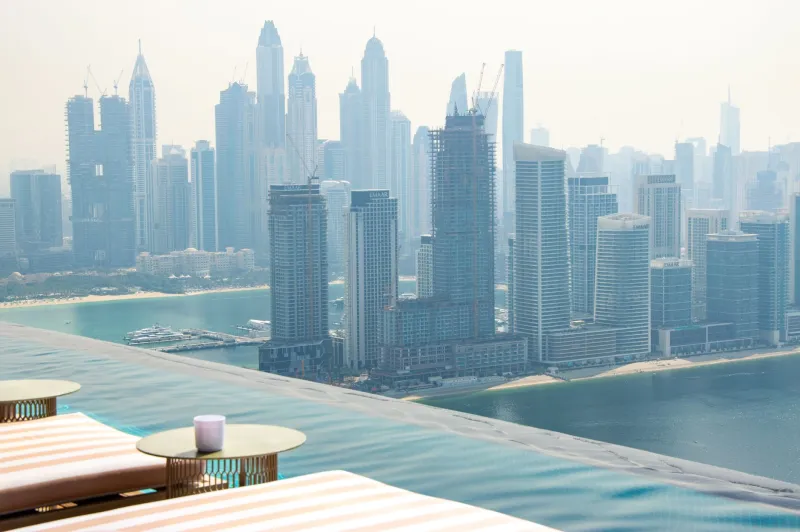
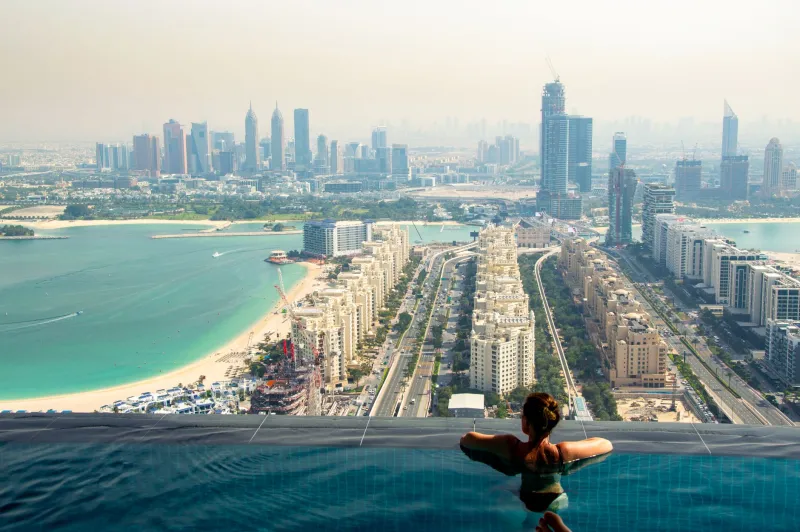
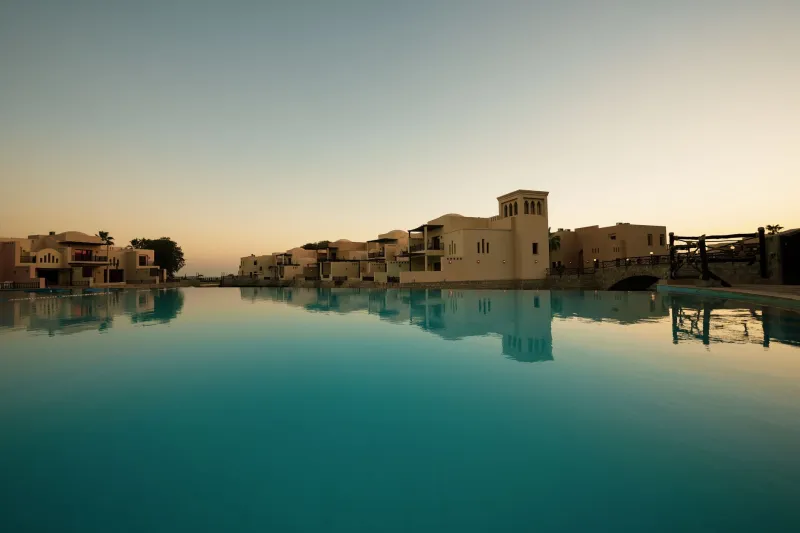
Al Marjan Island, the stunning man-made archipelago extending into the crystalline waters of the Arabian Gulf from the emirate of Ras Al Khaimah, has quietly become one of the world's most effective antidotes to this modern affliction. Not through rules or restrictions, but through something far more elegant: an environment so immersive, so sensory-rich, and so deliberately designed around human presence that the compulsion to check, scroll, and respond simply loses its grip.
What follows is an examination of precisely how that transformation occurs — and why it tends to be permanent.
The Architecture of Presence
The first thing many American guests notice upon arriving at Al Marjan Island is that the built environment seems to actively compete for their attention in the most pleasurable possible way. The island's resorts — including the landmark Wynn Al Marjan Island, set to become one of the region's most celebrated properties — are designed with a spatial generosity that is almost confrontational in today's compressed world. Sweeping Gulf views, open-air corridors that channel warm sea breezes, and interiors that blur the boundary between inside and outside create a persistent invitation to simply look up.
This is not accidental. The resort architects and interior designers working across Al Marjan Island have long understood what neuroscience is only now confirming: that environments characterized by natural light, water proximity, and visual depth measurably reduce the cortisol-driven vigilance that keeps us tethered to our devices. When the view from your private terrace is a panorama of the Arabian Gulf at golden hour, the pull of a LinkedIn notification becomes, almost comically, irrelevant.
A Social Culture Built on Genuine Engagement
Americans traveling to Al Marjan Island frequently remark on the quality of human interaction they encounter — not just with resort staff, whose attentiveness is legendary among returning guests, but with fellow travelers. The island draws an internationally sophisticated clientele: European families, Gulf nationals celebrating milestones, South Asian business travelers on well-earned breaks. What unites them, visitors consistently report, is a shared orientation toward the moment at hand.
This cultural atmosphere matters more than it might initially appear. One of the primary drivers of compulsive phone use is social anxiety — the fear of appearing unoccupied, unimportant, or out of the loop. At Al Marjan Island, the social currency is presence itself. Lingering over a multi-course dinner at one of the island's waterfront restaurants, joining a sunset sailing excursion, or simply being visibly at ease on a private beach section — these are the signals of status here, not the performance of perpetual busyness that dominates American professional culture.
Guests who return year after year speak of this shift in remarkably similar terms. "By the second day, I realized I hadn't checked my email in six hours and genuinely hadn't thought about it," noted one New York-based financial executive who has visited Al Marjan Island three times in as many years. "That had never happened to me on any other vacation. It wasn't discipline — the island just made it easy."
An Activity Ecosystem That Demands Full Attention
One of the most underappreciated aspects of Al Marjan Island's power to facilitate genuine disconnection is the sheer quality and variety of its experiential offerings. Digital devices tend to fill a vacuum; Al Marjan Island simply refuses to create one.
The island's water sports scene — kite surfing, jet skiing, paddleboarding, and guided snorkeling excursions above the Gulf's surprisingly diverse marine ecosystem — demands a quality of physical engagement that leaves no bandwidth for digital distraction. The island's spa facilities, particularly those offering traditional Arabian wellness treatments alongside contemporary therapeutic modalities, create extended windows of deliberate sensory immersion that recalibrate the nervous system in ways that a passive beach day simply cannot replicate.
For guests who prefer their activity at a more contemplative pace, the island offers early morning guided walks along its distinctive promenade, private yoga sessions overlooking the water, and curated cultural excursions into Ras Al Khaimah's remarkable archaeological and heritage sites. Each of these experiences shares a common quality: they require and reward undivided attention. Attempting to navigate a traditional souk while answering Slack messages is not merely impractical — it is, guests quickly discover, a waste of something genuinely precious.
The Guilt-Free Architecture of Disconnection
What distinguishes Al Marjan Island from the many wellness retreats and "digital detox" resorts that have proliferated across the American market is the complete absence of moralizing. There are no mandatory phone-free zones, no earnest workshops on mindful technology use, no subtle judgment directed at guests who choose to remain connected. The island is not trying to cure you of anything.
Instead, the environment simply makes connection so richly rewarding and distraction so comparatively thin that guests arrive at their own conclusions. This distinction — between externally imposed restriction and internally generated preference — is, psychologists note, the difference between a rule and a value. Al Marjan Island does not tell you to put down your phone. It gives you something so much better to do that you simply forget to pick it up.
What Guests Carry Home
The most compelling measure of Al Marjan Island's impact on its guests' relationship with technology is not what happens during the visit, but what happens afterward. Returning travelers — particularly those from high-pressure American professional environments — consistently describe a recalibration that persists well beyond their departure.
The mechanism appears to be experiential rather than intellectual. Having spent a week in an environment where deep presence was both possible and pleasurable, guests return to their daily lives with a revised sense of what connectivity actually costs them. The inbox that once felt urgent now feels optional, at least for the first hour of a Sunday morning. The dinner table phone check that was once automatic now carries a conscious weight it previously lacked.
This is the quiet gift that Al Marjan Island offers American travelers who arrive carrying the full burden of their hyper-connected lives: not a lecture on the harms of technology, but a visceral, embodied memory of what it feels like to be entirely, unhurriedly present. That memory, it turns out, is remarkably durable.
Planning Your Own Disconnection
For American travelers considering a visit to Al Marjan Island with digital detox as a genuine goal, a few practical considerations are worth bearing in mind. Longer stays — a minimum of five nights, though seven is ideal — allow sufficient time for the initial withdrawal period to pass and for the island's deeper rhythms to take hold. Selecting accommodations with direct beach or Gulf access maximizes the environmental immersion that drives the experience. And arriving with a loosely structured itinerary, rather than a tightly scheduled program, preserves the spaciousness that makes genuine presence possible.
The Arabian Gulf will do the rest.